Research trip: Musico Pratico in Italy
Members of the Musico Pratico research project of the Schola Cantorum Basiliensis and the University of Würzburg travelled to North Italy for a research trip in February 2026. We arrived Parma on Sunday, 22 February. The group consisted of Russell Murray, Johannes Menke, Fabian Moss, Luigi Collarile, Benedetto Cipriani, Giulia Capecchi, and Adrian Nagel. The aim of theis joint excursion was to explore key locations and sources associated with the composer and music theorist Pietro Pontio (1535–96) whose two music theory treatises are the focal point of the research project: the team is preparing a critical digital edition of Ragionamento di musica (1588) and Dialogo (1595).
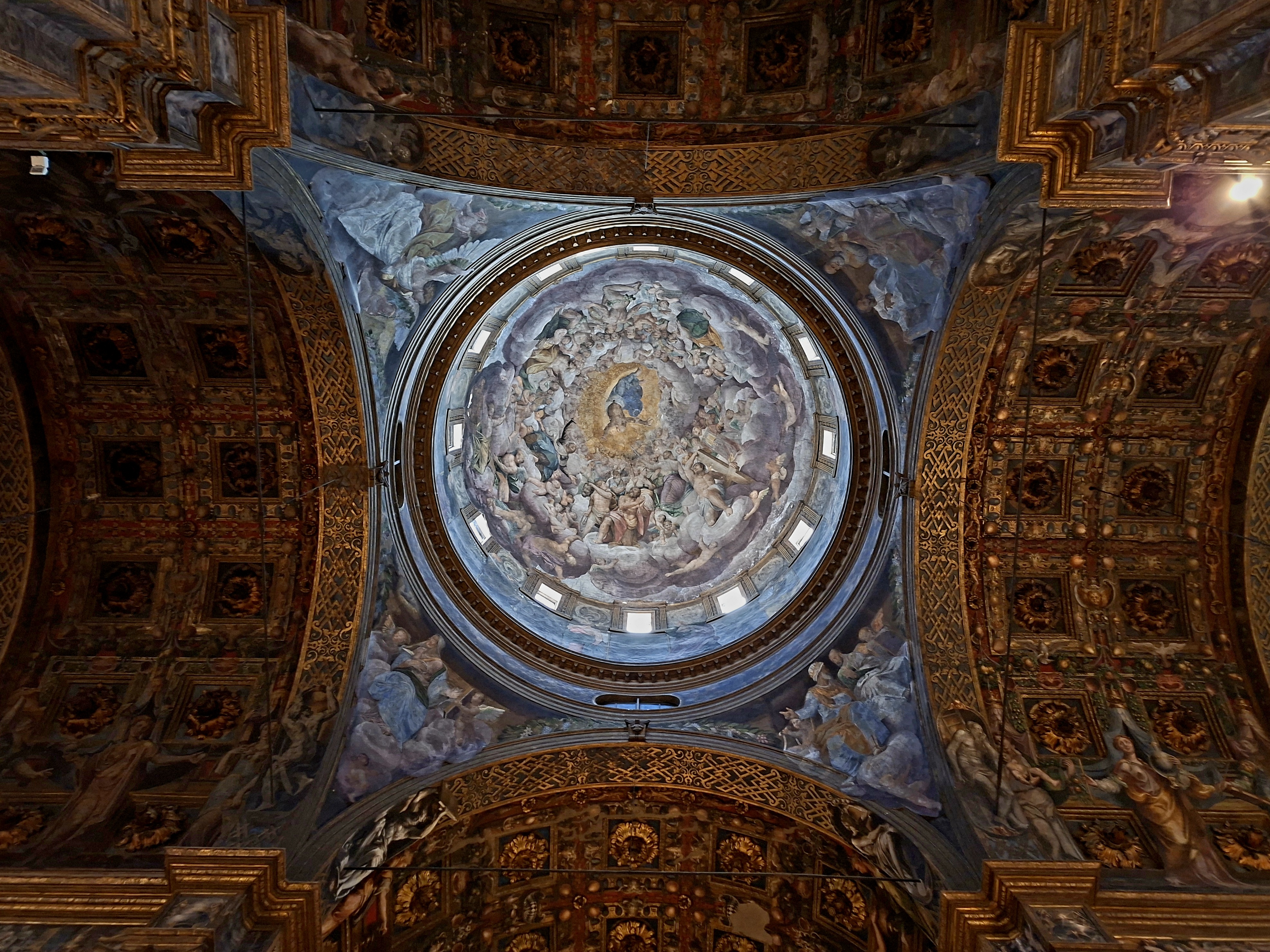
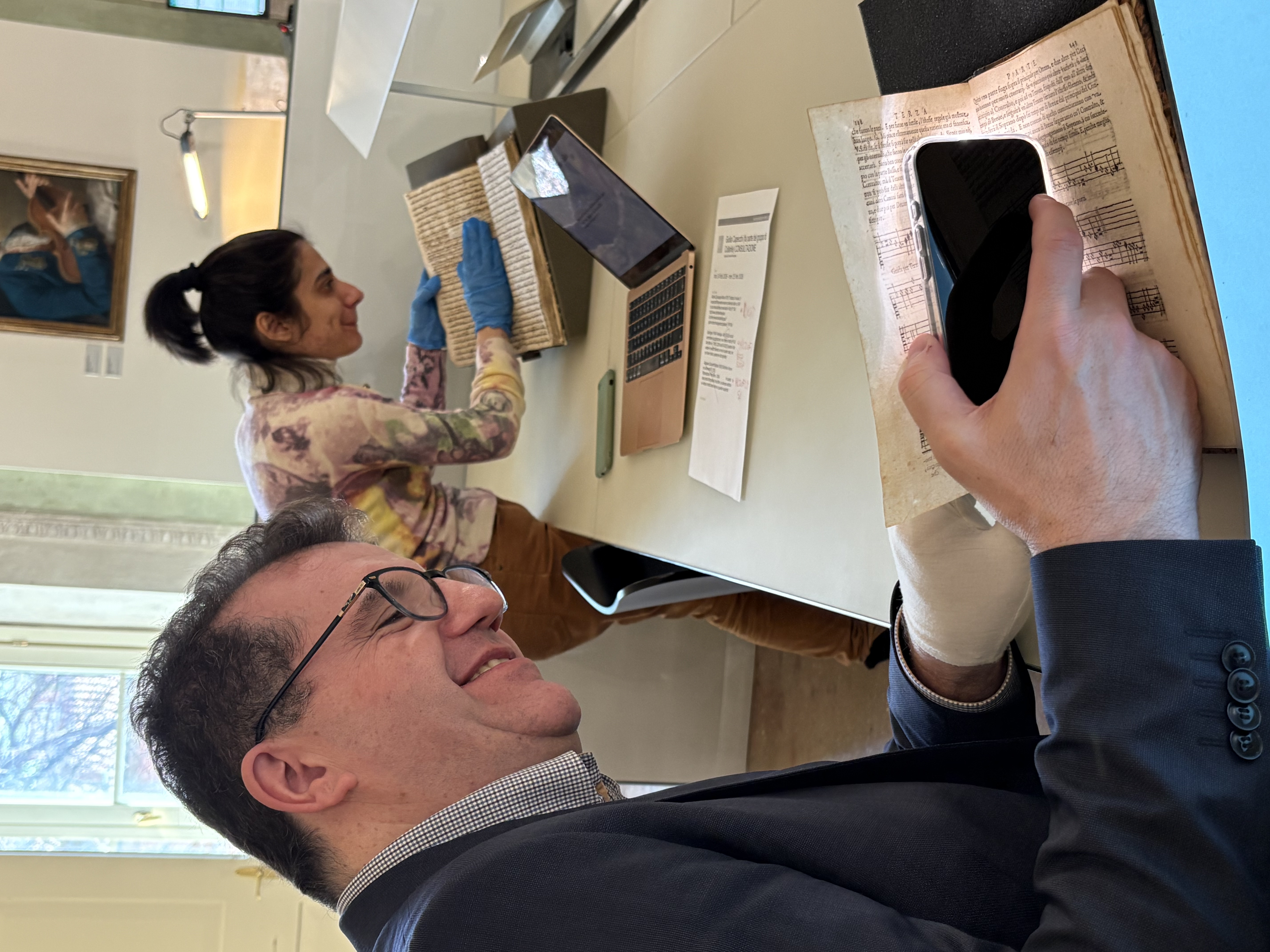
Our first day of research begins at the Cattedrale di Parma, with its beautiful dome frescoed by Correggio; here we visit Pontio’s tomb, located directly opposite that of Cipriano de Rore. From there we make our way to the Basilica di Santa Maria della Steccata, where Pontio worked both at the beginning and at the end of his life. In this setting, the connection between place, biography, and work becomes particularly tangible! We then continue to the Biblioteca Palatina, where we examine three copies of Pontio’s treatises: two editions of the Dialogo and one of the Ragionamento.
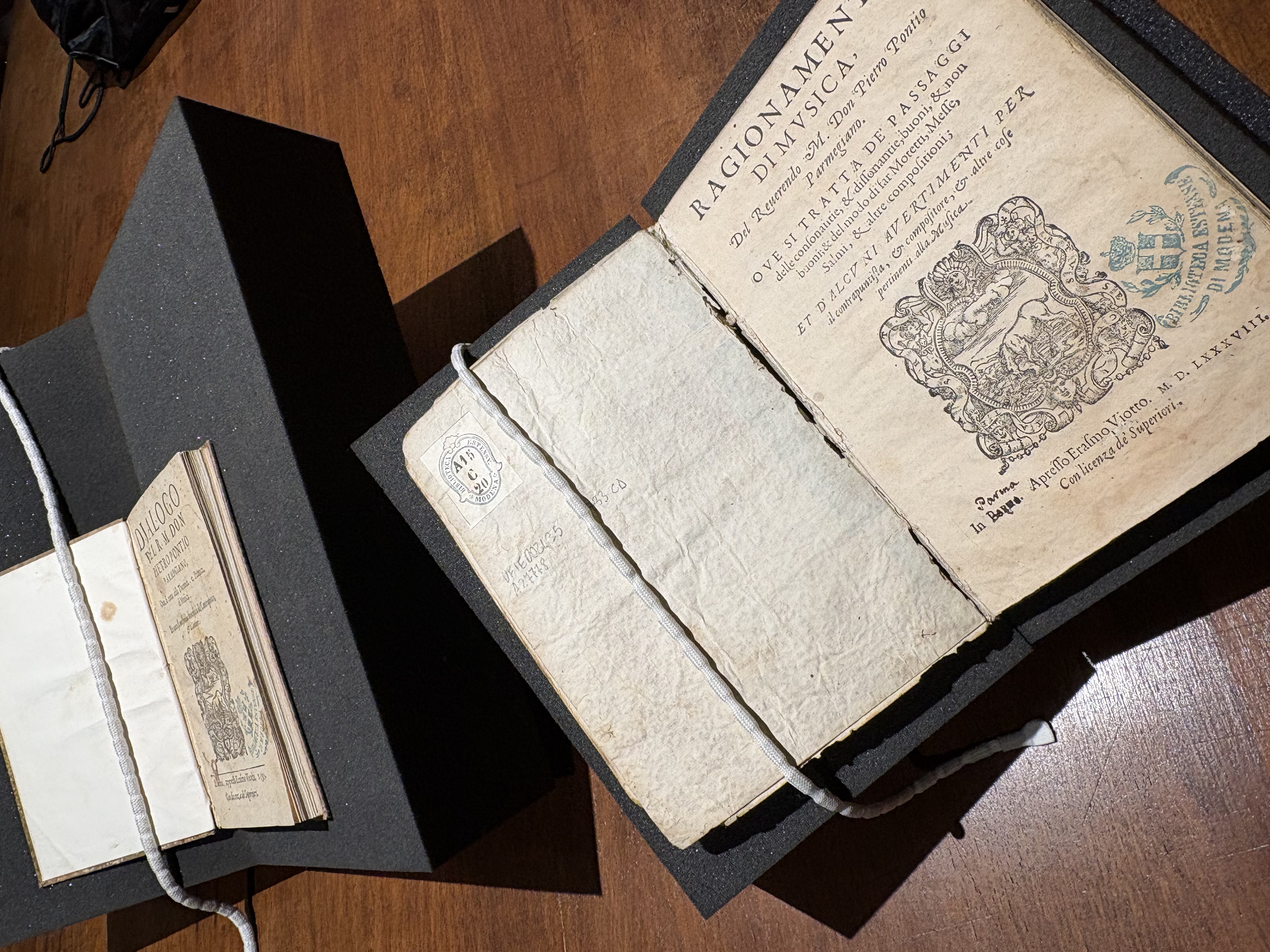
During the examination of the paper on which they were printed, we also identify watermarks depicting unicorns. After lunch, we continued our visit in Parma, exploring the Battistero and the Museo Diocesano. In the late afternoon we leave the city and take the train to Bologna. The following day is devoted entirely to further source study. At the Biblioteca della Musica we examine copies of each of Pontio’s treatises and consult several manuscripts and printed sources, including materials containing his compositions.
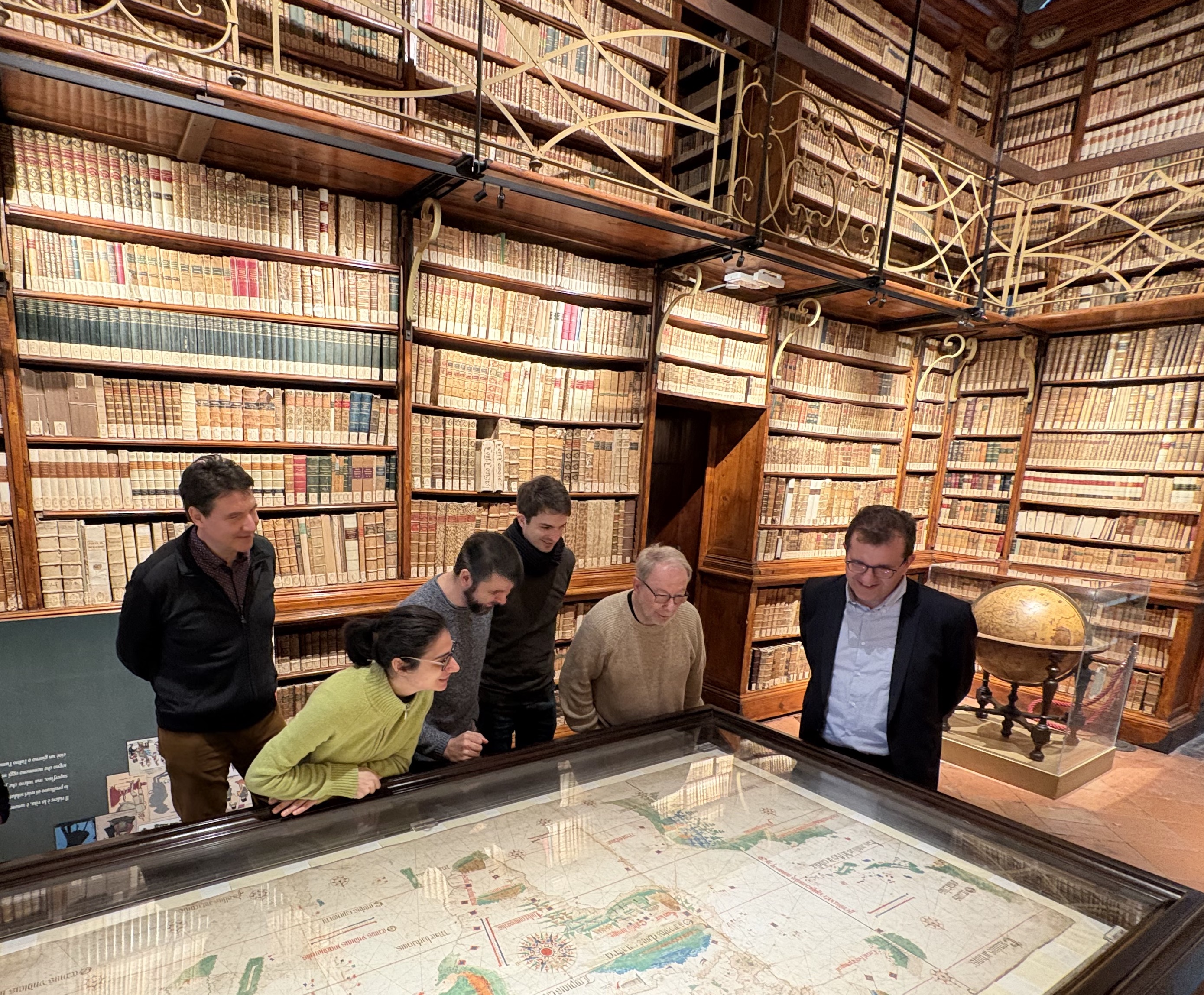
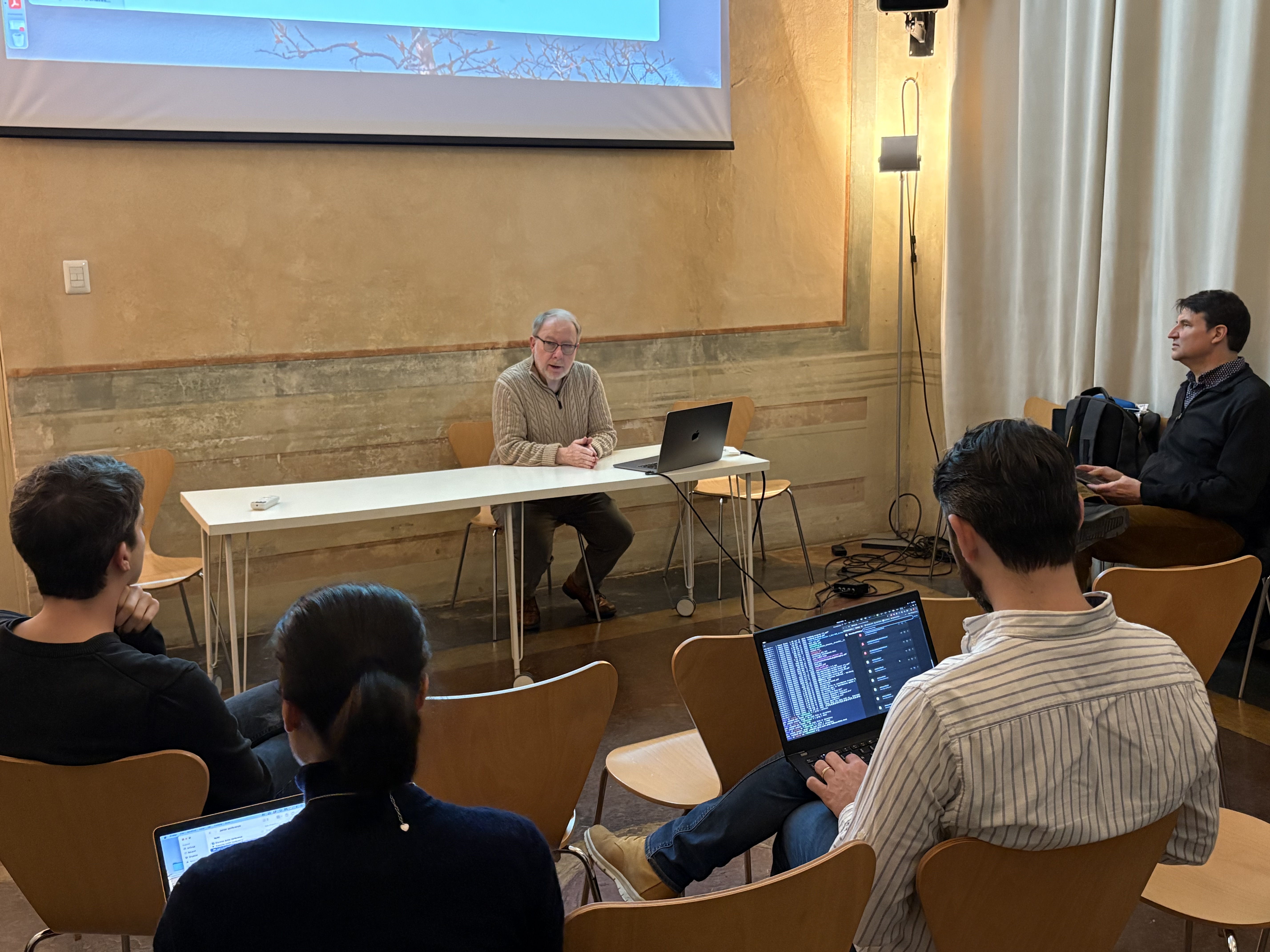
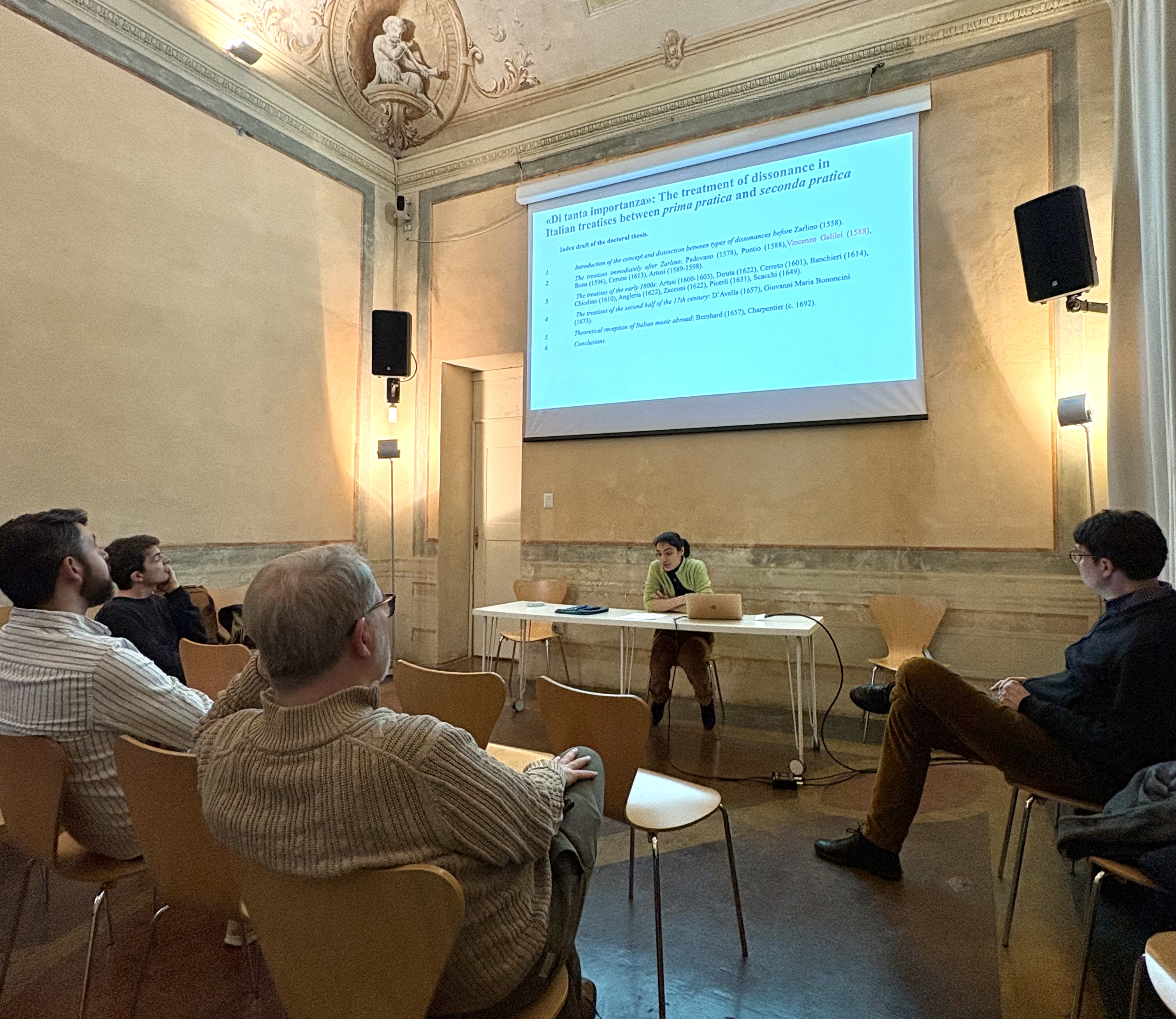
In the afternoon we visited the Museo Internazionale e Biblioteca della Musica, which originated from the extraordinary historical library of Giovanni Battista Martini. The exhibition offers fascinating insights into the local history of music printing and musical tradition: alongside important music prints and manuscripts, a remarkable collection of historical instruments is also on display. Among the highlights of the museum is the first music print ever published by Ottaviano Petrucci: the Odhecaton (1501). As planned, the group sets off again for the Biblioteca della Musica. The morning includes Junior Conference, a discussion among doctoral students, which also includes contributions from other lecturers such as Russel Murray and Fabian Moss. Professor Murray opens the conference by explaining why, at the end of the 1980s, he decided to write his doctoral thesis on Pietro Pontio, entitled The voice of the composer: theory and practice in the works of Pietro Pontio, a major source of inspiration for our project. Murray himself was intrigued by the figure of Pietro Pontio and decided to take a look at his theoretical works and compositions. After singing his music, he came to the conclusion that it was right to devote a more in-depth study to Pontio. He then showed us how intertextuality was a characteristic feature of some of Pontio’s compositions, as he quoted composers who preceded and were contemporary with him in his compositions. This topic ties in with the second presentation, by PhD student Adrian Nagel, on musical borrowings in sacred motets, specifically analyzing a motet (Si bona suscepimus) by the Flemish composer Phinot. This is followed by a presentation by doctoral student Giulia Capecchi on the extravagant use of dissonance in Vincenzo Galilei’s Discourse on the Use of Dissonance (1588), written at the same time as Pietro Pontio’s Ragionamento (1588) was being printed. Fabian Moss concludes the morning’s presentations by explaining the work of the Würzburg team, which is responsible for the digital side of the project.
The afternoon continues with a visit to the church and organs of San Petronio; thanks to the diligent organization of Luigi Collarile, we are able to meet the chapel master Michele Vannelli. He enthusiastically explains that the Chapel was founded in 1436 and was one of the most important musical institutions in Europe in the 17th and 18th centuries. It produced important forms of instrumental music and exceptional musicians such as Cazzati, Colonna, Perti, Vitali, Gabrielli, Torelli and Jacchini worked there.
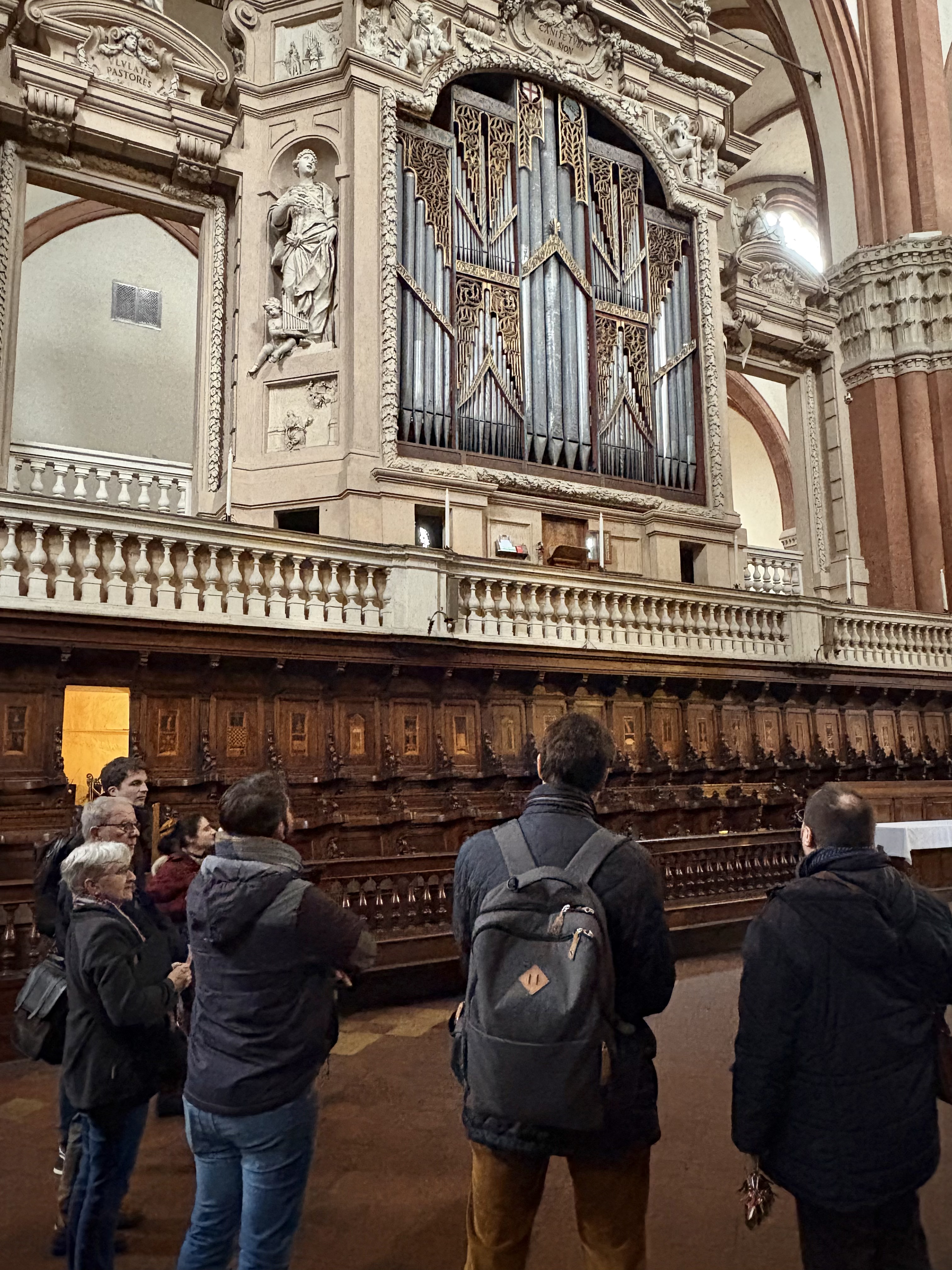
Today, the chapel is involved in the revaluation and re-performance of this repertoire, which is well known for its attention to counterpoint and musical colours. The two organs, the organ by Lorenzo da Prato from the late 15th century, is one of the masterpieces of Italian organ building and perhaps the oldest functioning organ in the world, and the organ from the late 16th century, by Malamini, faces it. We listen to the sound of the two organs, including a duet between Vanelli and Collarile, challenging each other in an improvisational contest. We rush to catch the train to Modena in the late afternoon and luckily everything goes smoothly.
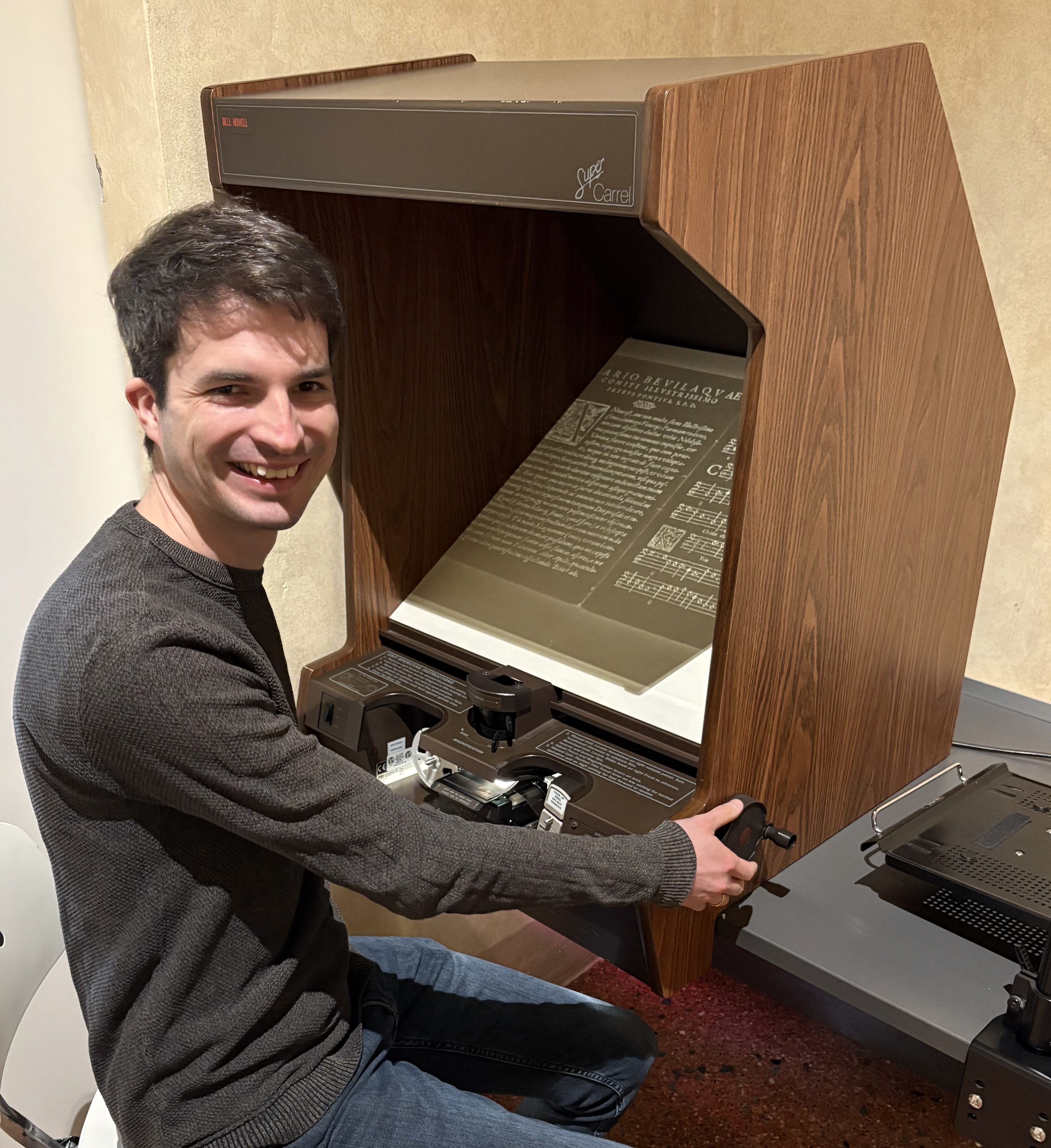
On the morning of the 26th, we set off for the Gallerie Estensi. In 1598, Alfonso II d’Este moved the capital to Modena due to the devolution of Ferrara to the Papal States, which is why the galleries contain collections of paintings and musical instruments belonging to the Este family. The court achieved great musical refinement in the 17th century. The morning is dedicated to visiting the library, where we are there to see the last copy of Ragionamento and Dialogo from this journey. Professor Murray is very happy to hold Pontio’s prints in his hands.
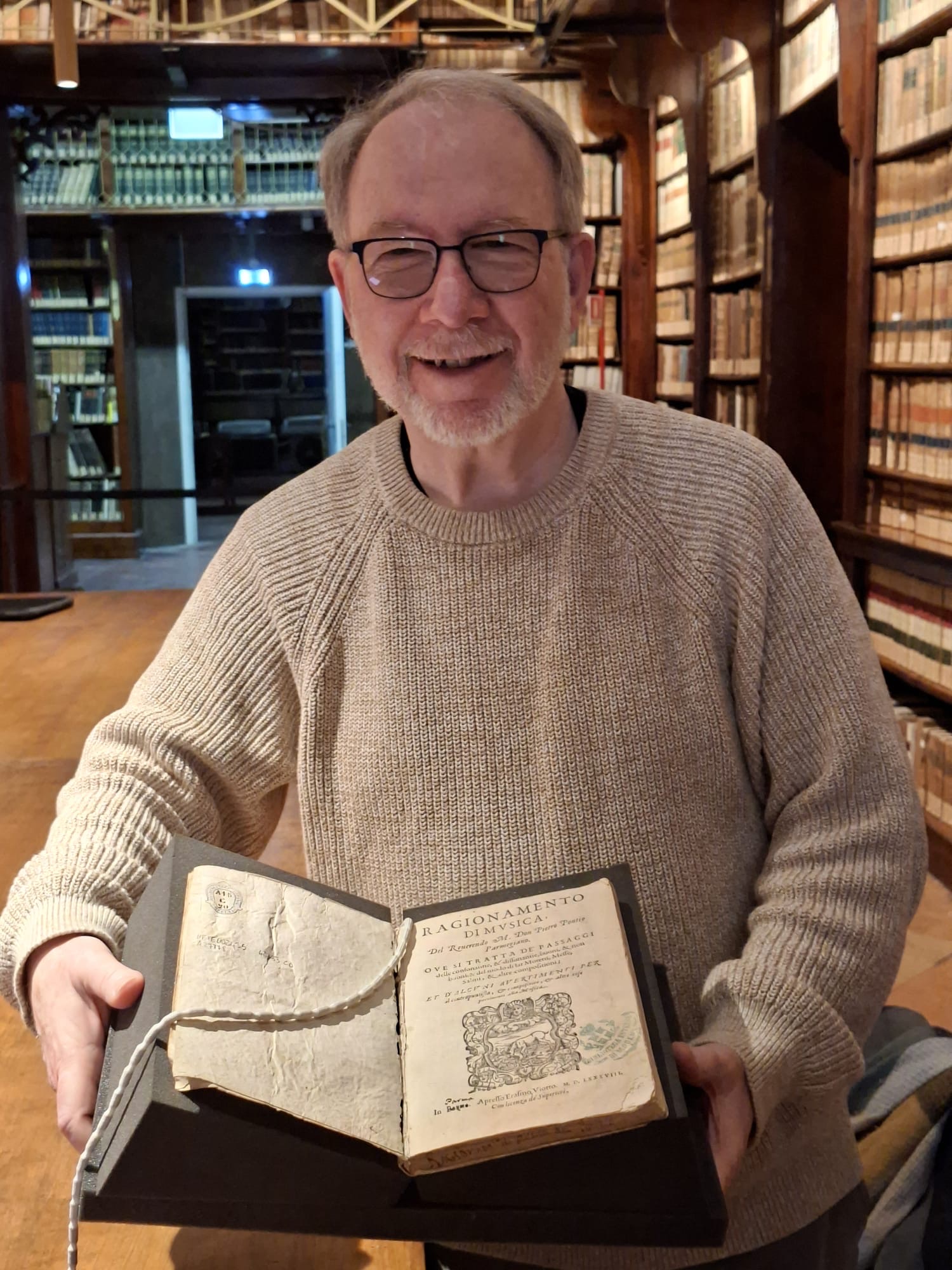
The morning is structured as follows: Benedetto Cipriani and Luigi Collarile show the results of their philological work, which consisted of requesting all the sources and preparing them for the collation process that will take place shortly. Murray is impressed by our work and the number of sources we have found. The group is now ready to return back to Basel and Würzburg and work with even more motivation than before!
Giulia Capecchi and Adrian Nagel
Other photos